By Gus Browning, printed in 73 Magazines in 1967-08
reprint by PA0ABM
Gus Browning story, Part 26
Tristan da Cunha
When last month's episode ended^ I was on board the South African ice
breaker, departing Capetown for the first scheduled stop at Tristan da Cunha.
Jack (ZS1OU) and I had gone aboard the ship a few days earlier. We had
installed die gear in my little stateroom and it was ready to go. I watched the
cily of Capetown slipping away in the distance as we headed in a general
Northwesterly direction.
After about an hour or so, the Captain said it was OK to use the radio gear,
so I headed back to my little room, turned on the rig, re-calibrated the
receiver and transmitter at 14100 kHz, then checked the SWR, It read almost
I : I so I was all set Out went the first CQ signing W4BPD/MM and I was back
in business again. The boys were all there, no East Coast fellows to be sure,
because the band wasn't open to them, but a goodly number of W6 s and
some W7's called. They all wanted to know when I expected to arrive at the island, I could only make an
educated guess at this time, so I told them the approximate time. Then the Europeans began calling and
all the info had to be given out again, This kept up for a few hours and since I was in no hurry, I took it
easy and gave them all the answers they requested.
When the little pile-up died down somewhat, I decided to take a walk around the ship and meet all the
crew again. I wanted to get to know them better and to see what kind of work each fellow was doing.
The last one was the wireless operator. He was all shut off by himself in his little poopdeck. We had a
long eye-ball QSO and I had a good chance to look over his Japanese built radio gear. It was beautifully
built and seemed to work very FB, The nicest part was that I had no interference from him on the ham
bands, and I didn't cause him any QRM either. This meant we could both operate at any time without
bothering each other. Later I found that this is not usually the case when you set up a ham rig on a ship.
The ship had been built in Japan about five years before, so as far as ships go, it was practically a new
one. The old diesels ran as smooth as a new Swiss watch. While on board the ship, I used to hang
around the engine room looking at those two big diesels. Each one was about the size of an automobile
and they purred like kittens. As near as I can remember, their cruising speed was about 300 RPM and I
was told they usually last a lifetime.
It was always interesting for me to sit and look at the Radar on board the
ship. It would even spot whales and waves in the distance if die gain were
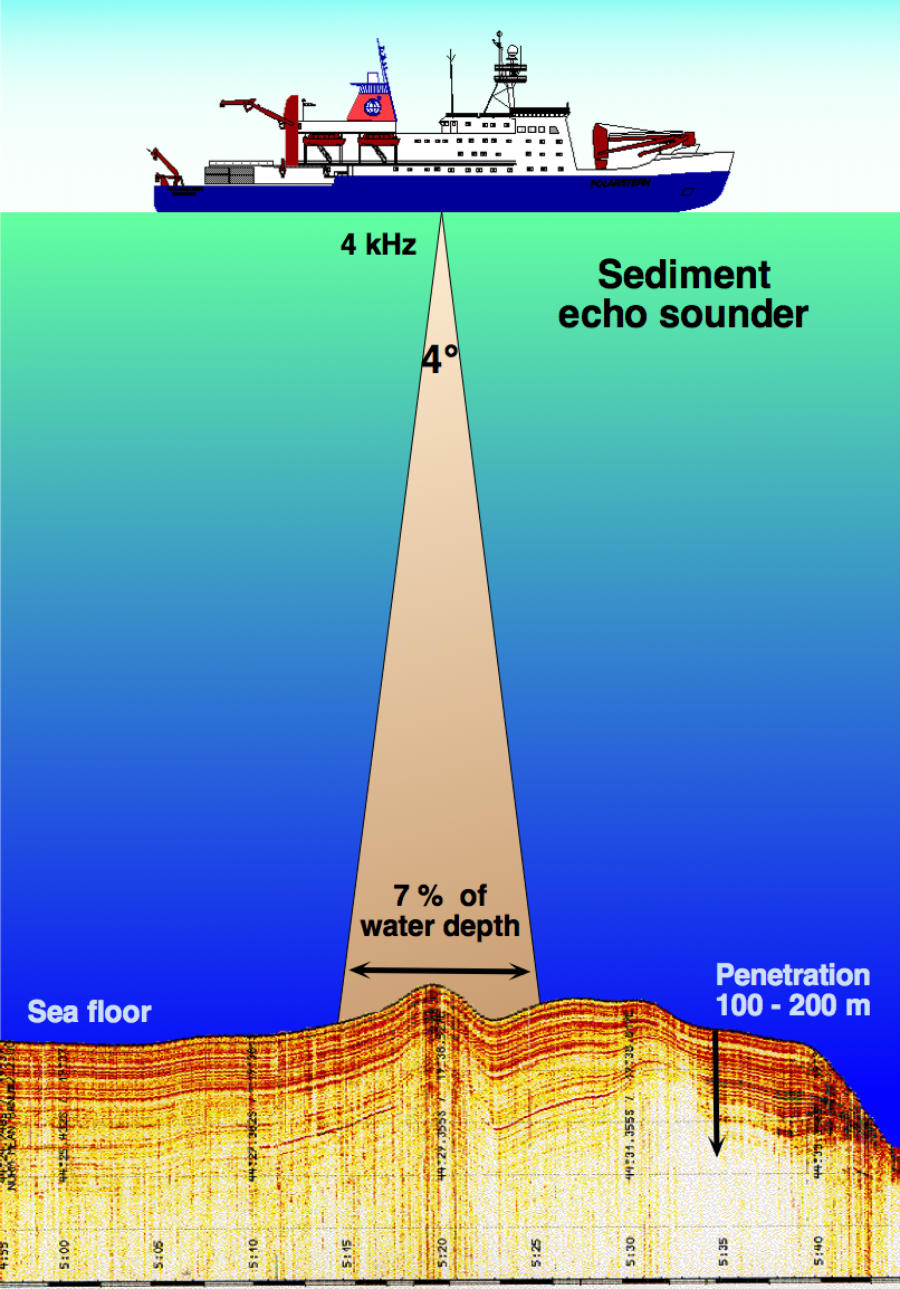
turned up. Then the depth finder was another item I found interesting. It
would show every hill and vale down below the ship and it would even spot
a school of fish now and then. Large fish could be easily seen and I
believe if one were to study it for a while, he could tell the size of some of
the larger fish.
Listening to the sounds from that depth finder made my flesh crawl. They
were some of the wierdest sounds I've ever heard. You could hear the
reflected echo from each of the objects shown on the CRT screen. This
was something I had never observed before in my life and it always
attracted me when I had nothing to do, especially late at night after the last
cup of coffee. I had brought about five cases of Cokes along with me and I
always kept a few of them in the ship's Fridge", as they called it. Some
nights it was coffee, other nights Coke— sort of depended on the mood I
was in.
I spent many hours of the night sitting up on the top deck looking at the strange arrangement of stars
overhead in the Southern Hemisphere^ with the Southern Cross about 45 degrees above the horizon.
During the early morning hours quite a few whales were spotted and each of them took a nose dive,
straight down, as the ship approached. They were really some "whoppers" too. Listening across the
bands, when there was nothing else to do, was always interesting, especially if someone was talking
about me. It did sort of shake them when I would break in and say, "'Hey, Ole Buddy, you had better be
careful, I am a lissenin to what you say".
I had plenty of time to just sit and reflect and ask myself why I was down here, away from all the
comforts of home and my nice family . . , especially sweet Peggy, The more a DXpeditioner thinks about
it, the more he is convinced that the fellows back home in the air conditioned houses or apartments are
actually getting more enjoyment out of the DXpedition than he is. It's like I have always said, the fun is in
the chase, getting in the pile-ups, working that elusive and rare DX^ then going in and telling the XYL
about it , , and she sometimes saying, "So what?*'. I am sure the only one who can appreciate the thrill
of working a new one is a real DXer, The 75 meter rag chewers cannot understand all this, and you are
wasting your time trying to explain to one of them how it is with you. But, you know, if every ham was a
real DXer, the bands would be absolutelv unusable. Can you picture the mess if the pile-ups were about
10-15 times as high as they are? The poor DXpeditioner would go stone crazy and would not make as
many QSOs as he does at each stop.
Every chance I got, I would go on the air and sort of keep a running account of how we were
approaching our goal— Tristan da Cunha. The South Atlantic seemed, on the entire trip, to be in a mean
mood. There were never any of those near calms you sometimes see around the Seychelles in the
Indian Ocean. Mind you, this was Summertime, so I can just picture what it must be like during the
winter season down there. They tell me it gets pretty rough during 'those months.
One nice thing about being at sea is the superb conditions and the late hours the bands stay open. I had
observed how early he bands closed when I was operating from ZS1RM, They closed just about the
way they do in the USA, but it was a completely different story at sea, I hoped the bands would be like
this when I finally got ashore at the places I was heading for.
I noticed that when the wind blew from the Southwest at night it got downright chilly. Even during the
daytime^ it was too cool and too windy to enjoy yourself on the deck chairs. I suppose that cold air over
Antarctica must have had its effect even at this distance from it.
Big schools of fish could be seen at all times, and I was amazed at the number of birds which could be
seen from the ship all day long. Many of them seemed to be following the ship. Maybe they were lost
and figured we would sooner or later bring them to land.
Food was no problem on the boat. There was plenty of good
eating at eveiy meal. Occasionally the crew had some beer. The
Captain and First Mate treated me royally and I got almost
everything I asked for, I was their guest and they really knew how
to treat a guest. Maybe one of these days I will get a chance to go
with them again. I would take them up on it tomorrow . . maybe I
should get a letter off to them one of these days, eh?
I have found that if you are friendly when you are away from the
USA, everyone is then your friend. If you act "snooty" (like some
people still do) then they know how to treat you. You can get "red
taped" to death when you are at their mercy overseas, you know.
So, Ole Buddy, take it easy over there. Be friendly to everyone and everyone will be friendly to you.
Things will go much more smoothly for you, I think most people in the world want to be friendly and if
you act right and say the right things, they will go all out for you when you need them.
This really pays off aboard a ship. If you like to eat, always make it a point to be on friendly terms with
the head cook. Then you can always visit the galley at any old hour and get a real good handout, or a
fresh cup of coffee, and you can get him to cook little things especially for you.
I got to know the three men who were going to Tristan da Cunha, They were part of the island's
population which was forced to leave when the volcano exploded a year or two before. They spoke a
very odd type of English, but were very friendly. They told me about someone else who had operated a
ham station from the island some years earlier. The trip to the island took about 4 or 5 days. The days
seemed short to me, since something was going on every day. It seems like yesterday to me, sitting
here writing all this some years after it happened. Right now, I can almost hear those wierd sounds of
the depth sounder going on all day and all night. I wonder how many of the old crew are still with the
ship . . -or even if they are still using the same ship
One morning the birds became more numerous than usual, and the ship s intercom announced that
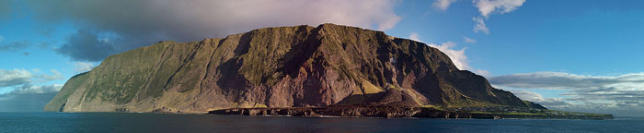
Tristan was being approached. In another hour, what appeared as a few mountains sticking up out of
the water was seen on the horizon. There was a little smoke coming from one of them. The men from
Tristan da Cunha became nervous and big smiles came over their faces. They began shaking hands
with everyone. They were coming home after being away for a long time. As we came nearer, I could not
understand how anyone would be anxious to get back to such a dismal looking spot But it was home to
them, I suppose, since each of them had been born there and had lived most of his life on those rocks.
As for me, I sure would hate to know I had to spend the rest of my life on such a miserable island as
this.
The ship anchored about half a mile off shore and a few small boats were
placed in the water for some of the crew to go fishing for rock lobsters.
Rock lobsters are very numerous in that part of the South Atlantic, The
large landing boat was lowered and the three islanders, the first mate,
three of the ship s crew, and I boarded the craft. We were lowered to the
water and then headed for the island. ^
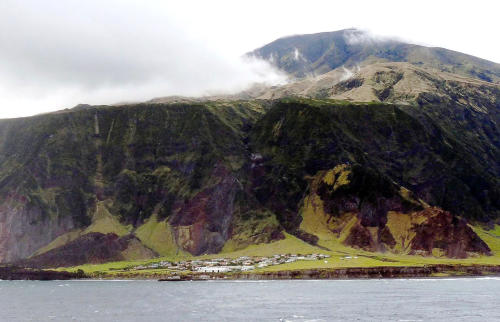
As we approached, I could see that it was even more desolate than it
looked from the ship in the harbor. The color of the sod was almost black
as coal and the spots where the lava had streamed from the volcano
looked like frozen liquid coal. There were three or four streams of this lava
which had flowed down to the sea from the volcano. ITI bet this was a
sight to behold when it was actually taking place,
When we landed, the three men headed for their homes which were still
standing, They went all over the place looking into the other houses.
While this was going on, I was trying to figure out the best spot to put my
antenna and which house to use as my ham shack. I discussed this with
the First Mate, and that's when he told me they were planning to leave there the next morning, at the
latest! The Tristaners decided they would stay, so when we got back to the ship, all their posessions,
even a few goats and sheep, were loaded into the landing craft and they went back to the island after
shaking hands with everybody, I stayed on board the ship and went on the air to tell the fellows where I
was and what we were going to do.
The fellows who had been fishing came back with a few rock lobsters and some nice looking fish. In the
distance, we saw a ship approaching us. The fellows with the signal light got busy and had a QSO with
them as they neared our boat. They pulled up alongside us and their Captain and First Mate, along with
a few members of their crew, came over to our ship. We all went into the dining salon for a few cups of
tea. They were in need of a few items in the food line, and a few drums of some kind of oil. In exchange
for this, they gave us between 500 and 1000 pounds of rock lobster.
Their ship was one of two which stay in the waters around Tristan da Cunha many months of the year to
fish for rock lobster. They had had a good catch, they said. They were practically a floating refrigerator
and when they were fully loaded, could carry many tons of lobsters. They take their boats back to
Capetown when full, and most of these lobsters are then shipped by air to the USA. Their crew was a
very rough looking bunch and hard as nails. These fellows had been following this business a long time,
I was told.
We departed for Gough Island at about sundown. Everyone had a big plateful of rock lobster for dinner
that night. Needless to say, they were delicious.
Just before darkness set in was the last view I had of Tristan da Cunha with the little stream of smoke
still coming from the smoldering remains of their volcano, I seriously doubt if I will ever again see this
island.
Later, I read in the newspapers that all the inhabitants who fled the island during the eruption had
returned there. Then sometime last year I read that many of them wilted to leave again, I suppose their
sample of modem civilization had spoiled them. As for myself, I don't see how anyone would ever want
to live on that cold, damp, bleak patch of rocks sticking up out of the cold South Atlantic in the first place.
I don't think the wind ever stops blowing, and it seems cold all the time, even in their summertime.
Gus
Gus Browning, W4BPD

Hams - W4BPD - Gus Brwning 03