

By Gus Browning, printed in 73 Magazines in 1966-01
reprint by PA0ABM
Gus Browning story, Part 09
Failed attempt.
At the end of Chapter 8 I was on the island of Mahé with W0AIW, W0MAF,
W0UQV and Harvey Brain, VQ9HB where we had all gathered for the
purpose of going to either Agalega or Aldabra Islands. The boat had been
chartered from Harvey. Plans had been made to have the boat ready for us
to depart immediately upon our arrival from Mombassa. But the boat was a
long way from being ready to leave, Some of us were at the point of wanting
to go back to Mombassa because we discovered that it would be almost
impossible to get the boat in condition to depart in a day or so.
The boys had a rather tight schedule, as they had to return home by a
certain day. As for me, I had no definite schedule, my problem being
centered around money. After much talking and work we did get the boat in a
more or less seaworthy condition. Harvey went to Temolgee's Store and
bought the necessary things we would need. We loaded our equipment on
board. The transmitter was strapped down in the hold on a small table and
the *putt putt* (generator) was fastened down on the front of the deck* The cook stove was in the center
of the deck with the two 50 gallon drums of petrol fastened down very near it . J Macan the cook had his
big bag of rice, ole Doc had his deep sea fishing equipment, and Harvey had his black cat. We were as
ready to go as we would ever be.
Harvey maneuvered the ship very expertly through the maze of buoys and other obstacles between the
short pier and the deep water of the channel Mike got his deep sea rod out and put a spinner on the line
and let it out behind the boat some 150 or 200 feet.
Macan got busy with his cooking on the open deck. Now let me tell you about that cook stove thing. Built
up on the deck near the center of the deck was a spot covered with sand some 3 or 4 inches deep. In
the middle of this box in a pile of sand were four metal rods with metal on top of them on which to set
the pots and pans. The fuel used was pieces of wood that burned under the pans. This was what you
might call a real open air stove. Of course when the fire was lit there were a lot of sparks and with the
wind that was blowing, these sparks would fly everywhere. Now with two 50 gallon drums of petrol not
too far away it certainly did make for interesting conversation. I told the fellows that it did not worry me at
all, I said that I was just going to let my insurance company worry— there was no need for both of us to
worry, I don't think this line of reasoning went too well with them though.
We were headed for Agalega which back then would have been a 'new one'. Port Victoria faded in the
distance. The seas were in a very fine mood with nice little swells with a sort of clockwork rhythm to
them. The boat would rock from one side to the other and then the bow would go down and then the
stern, I called this the Mahé Twist or the Seychelle Swing, It was a real soothing sort of thing, at least to
me it was. Not having been to sea before and not having enough sense to know that such carrying on
would maybe get the sea sickness bug started, I just sat back and enjoyed it all. For about the first three
or so hours we were in the open channel and not too far away from land so we were shielded from the
white caps of the open sea. When we approached the end of Mahé Island I could see all those pretty
white caps on the deep sea beyond, I could see that things were going to get very interesting when we
left the protection of the island and were out in the real ocean.
AH this time Macan was busy cooking his rice and fish. You know, down there they let the head stay on
the fish when they fry it and they fry it in some sort of oily oil which never cooks the fish to a brown color.
In fact when it is completely cooked it is the same color that is was when first put in the frying pan I
noticed that Doc was keeping one eye on the fish and the other on the sparks flying here and there.
Well, there we were four land lubbers about to hit the open sea in a small boat about 50' long and about
I2' across. It was basically a sailboat with a small diesel used generally for docking or when there was
no wind at all It was a good seaworthy ship and Harvey a good captain. There were no conveniences of
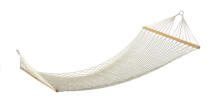
home on board. You slept down in the hold in swinging hammocks and there is the usual smell that
exists in the hold of boats like this. The smell is a little fishy, a little diesel oil, a little kerosene and a little
petrol. Then there is the smell of human beings mixed up with all these other smells, and, of course, a
little black cat smell thrown in with all the others. But, you are on a DXpedition. When things are not
going right and the situation is a little rough I always think of all the boys back home that are watching us
and getting their rigs right, locking their front and back doors so they can safely run a good kilowatt
without being bothered by the FCC walking in on them. You know the old saying, "the show must go on/*
A few smells here and there are of small consequence— at least that's my opinion.
We were heading for a good one— Agalega Island— and the quicker we got there the betted it suited
me. I had had a sample of the thrills of being chased at Monaco, San Marino and Compione d'Italia and
wanted some more of it. Of course we did some /MM work on the boat telling the fellows we were on our
way. Along about this time we had arrived at the end of the island of Mahé and were now heading for the
open sea. Remember I am writing this little chapter in August I965 and the trip to Agalega was in the
month of August I959— that's six years ago, so some of the little highlights here and there may be
forgotten since I don't have any of my notes with me here in 4X4 land.
I am now operating now 4X5VB at what's called a kibutz. This is one of the community farms of 4X4
land. These farms here are run like a big family. This is a small one, only about 2,000 acres and about
260 adult workers, half male and half female* Everyone eats in the big dining room. There are about 4
families in each house. These houses are built long, like a motel back home and every family has about
3 rooms to use. They have a day nursery for the little ones and also a kindergarten and then grammar
school. It is a good deal, but I doubt if they would work out in the States, The people in the kibutz can
leave anytime they want to. Most of the people stay here all their lives, They have the security of
knowing they have a roof over their heads, clothes to wear, plenty of good food, medical services and
retirement when they become too old to work. Most of the people work only 6 hours or so each day.
They have a swimming pool and all sorts of sporting facilities. I have heard or read somewhere that life
on collective farms in some countries is not quite so pleasant and you cannot leave when you want to.
That's not so here* If you are looking for lifetime security this is the place. I understand they have been
running these for a long time, so they do work.
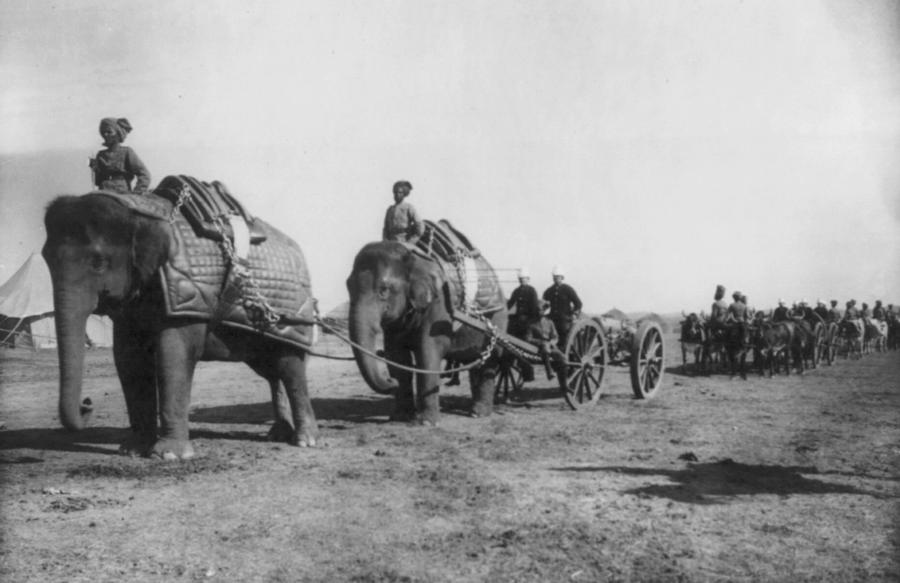
So much for the kibutz. Let me ask you if any of you fellows have ever ridden a camel. I don't mean just
to get on the back of one and let someone take your picture, No, I mean ride one for a whole day. We,
Dick YA4A and I did this while we were up in Afghanistan because that was the only way to get to one of
the places where we operated. To me it was not much fun— and we had to ride one back too. I see why
they call one of them 'the ship of the desert'. You can get sort of sea sick with that swaying back and
forth while they walk across all that sand. In the afternoon and I mean every afternoon about 4 pm the
sand storms come up and the sand is flying for the next 2 or sometimes 3 hours. At that time vou are
one of the nomads you have heard about. You can hardly see beyond the nose of your camel During
these sandstorms I suppose the camels go more or less by instinct with their built -in radar systems
guiding them. You should have seen Dick and I with our outfits on. We really looked like 2 shieks sitting
on our camels. The radio equipment and 'putt putt' were strapped on 4 other camels.
This is DXpeditioning the hard way. I think
Dick and I have had it as far as this kind of
DXpeditioning is concerned! But you know
you are trying to put a rare prefix on the stir,
and this is part of the game. We really did
get to see many out of the way places in
Afghanistan. Oh yes, we were in sight of
UI8, UL7, and UM8. We checked up on the
Kyber pass area and you know there is a
neutral zone there, so we took this up with
the ARRL. to see what the chances were for
it being a new one. Also we are looking into
this Kingdom of Swat business. Now that
would be i dandy wouldn't it? When you run
out of countries you have to make' em.
Cokes in Afghanistan (I2 oz. cans) are 50
cents each! I controlled my desire as much as possible, only one can per day. There is a chance of a
return trip to YA land if the ARRL makes either of the above spots a new one. Well, there you are, now
back to the trip to Agalega.
Here we were just leaving the island of Mahé behind us and entering the deep blue of the Indian Ocean
and the SE Monsoon was just beginning to end. Everything had been going so smoothly and nice until
we got a short distance from the shadow of the island —Bang, we were in it all of a sudden. Doc pulled
in his trolling line and things were secured very quickly. You should have seen that Hi-Gain model I4
AVS swing. The salt spray was all over the place, Macan was fighting his fire under the cooking thing on
the deck and needless to say those sparks were flying everywhere. Everyone was hanging on to
something to keep from being blown overboard. Harvey was in his poop deck house and keeping the old
tub under good control since this was nothing new to him. This tossing and pitching kept up from then
on until we finally came back some 3 or so days later.
Well, finally it got time to eat-after we had been tossing and pitching all this time, Since we are rice
eaters in South Carolina, I told Macan to fix me up a plate of rice and fish. I noticed that Doc was
keeping his eyes glued to that oily fish on my plate. When I told Macan the rice looked too dry, Macau
put more gravy (gravy being oil) on top of my rice. Well, that's when Doc decided it was lime for hint to
count the fish over the rail. Here I was sitting down right smack on the deck eating my fish and rice
dinner. Doc came back from his little run to the rail and I said "Join me, Doc, the food is FB." While
saying this I picked up the fish by its head and chomped down. A little oil dripped from my hand to the
deck— well there went Doc again with his fish survey. Just before he departed he said to me "How can
you, Gus?" During all this, Lee and Mac (AlW and UQV) were eyeing the happenings and even Mac
was starling to get a little pink around the gills. Lee had everything under control pretty well though. As
for me, I was hungry and enjoying a delicious fish and rice dinner. I believe the oil on the fish assists it in
going down. Mineral oil for assistance is not needed if you eat Macan’s fried fish, they have the self-
oiling feature built in already.
If you want a good picture of one of these fried fish, you take the scales off a regular fish and dip it into
some cooking oil, hold it up and take a good look and you will get a rough idea of those fried fish. The
W0 boys from Kansas City probably had worked up themselves a good appetite watching me eat that
fish, so they sent down to the hold and came up with various cans and can openers. But for some
strange reason none of them had much of an appetite. As for me, I cranked up the “putt putt' and down
to the hold and radio I went and called a CQ or two and worked probably W3CRA and W4TO. I even got
a message through to the XYL— Peggy— that we were under way to Agalega.
All day long it was solid overcast so Harvey could not take a bearing. I noticed that about one foot of
water had accumulated in the bottom of the boat and was swishing around my ankles while I was
operating the rig. I mentioned this to Harvey and he said he guessed that the old bilge pump on his
diesel was not working again. I also mentioned that the toilet was not flushing either, Things were
starting to get interesting you can see. We stopped using the toilet from then on and then we used the
rope system where you tic one end of the rope to the bottom of the ship's mast and the other around
your waist, and you sort of hang over the side of the ship and hope no snapping sharks happen to pass
by,
I asked Harvey what was the ship's position, Harvey got out his charts and maps and said by dead
reckoning we would be about here— pointing his finger at a place located not too far north of Platt Island
It was pitch black outside and with all the waves and wind making lots of noise I was sure that il we
sneaked up on the island during the night we could not have heart I the waxes washing the shore. I said
"Harvey, what will we do all night?" He said that he was going to let the boat drift. I said, "Harvey,
suppose we are closer to the island than your dead reckoning indicates, man, we might wash ashore.”
He said that this was not possible since the island was surrounded by a coral reef. You know these coral
reels arc like a Stone walk ll s murder if a boat ploughs on to them, even worse than wrecking ashore on
a nice beach. Harvey said he didn't think we would drift to the island during the night so we had nothing
to worry about. We fired up the rig, had a number of QSO's and with wet feet from the hilge water
washing up around our ankles, went to bed on the swaying hammocks in the hold* I got up a number of
times and went top side and tried to peek into the darkness beyond the boat, but I couldn't see anything.
Well, we did not drift on to the coral reef. Morning came and Harvey got a good shot of the sun when it
was rising out of the water, grabbed his charts, and said Platt Island was over that-away and that we
would see the island in two and one-half hours. Let me tell you Harvey was exactly right. The island ime
in view exactly at the moment Harvey had mentioned. At first it looked like a small, flat dark thing way off
in the distance. When we arrived at the island Harvey said he would have to search for the one spot
where it's possible to slip through the coral reef. It seems as if every one of these islands has just one
opening in their coral reefs, Harvey found the spot and by timing the ship's forward motion with the
swells, glided through the small and shallow opening. Things were very nice and peaceful inside the reef
No waves and crystal clear water. You could see the bottom of the lagoon and it looked only a few feet
deep. Many colors of fish could be seen swimming around. Out came the fishing poles and we selected
the ones we wanted to catch. We had fish for breakfast. Some of the crew jumped overboard for a swim,
They dove down and brought up some beautiful coral, I asked them how deep it was and was surprised
to find that Is was something like 30 feet.
Well here we were at Platt Island on our way
to Agalega, with the winds and waves getting
a little rougher all the time. Finally we had a
meeting with everyone present. From a
health viewpoint things were not too good,
with the toilet not working and the bilge pump
not working and a good bit of water settling in
the bottom of the hold. It was finally decided
that if Harvey could get the toilet in good
working order and the bilge pump working,
we would continue on our way to Agalega.
Upon opening up the toilet we found that we
needed a lead ball about one inch in
diameter. Well there was no such thing on
board, but there was assorted pieces of lead
that were sinkers for fishing lines. You should
have seen Harvey and the boys melt lead on
Macan's cook stove, A lead ball was cast
using the sand as a mold that was under the
stove. Let me tell you, they did a darn good
job with that lead ball. With a little sanding
and filing the lead ball was OK, installed to
the toilet and boy, we had a toilet again.
Next was the bilge pump. It was torn down and completely repacked with various bits and pieces of
cloth, re-assembled and installed. It worked FB also. We spent the rest of the day installing a depth
finder that the W0 boys had brought along to give to Harvey. We found that it worked very well and
would even locate schools of fish.
By this time the weather had gradually become worse, Getting back through that little opening in the
coral reef was real tricky because this time we were inside. We waited until it was high tide and with
Harvey at the wheel knowing all the tricks, we just slipped through with only about one foot of clearance
between the bottom of his boat and the reef. We were off again to Agalega.
But those waves and swells were a lot higher than before and seemed to be setting worse all the time.
There was lots of pitching and twisting of the ship and the seasick prone fellows were really catching it
now. Well, we continued on towards Agalega Island for about half a day longer. I will admit the wind was
a little higher and one or two of the Kansas City boys were getting a little sicker so we had another talk
about the prospects of our getting to Agalega.
It was decided (against my strong protests) that it would be best for us to turn around and go back to
Mahé. Our trip to Agalega was shot, Here we were only a few hundred miles from our island, a heck of a
long way from the U.S.A., and we were giving up right when a little bit more 'toughening it out' would
have put us on the island, I decided then and there that from then on I would be a lone wolf on any other
DXpeditions, I have found that you have to have a great deal of patience, take some risks and be a little
careless if you want to get to some of the more remote spots in the world. Things just don't go smoothly,
at least for me. There is always something turning up that makes thinks look impossible nearly all the
time. It seems like the Indian Ocean never does get really nice and smooth.
We arrived back in Mahé and as far as I was concerned the
trip was a complete failure. But I made up my mind that one of
these days I was going to return and go to some island in that
area and put it on the air. At least the trip, as far as we went,
convinced me that I could take the rough seas and not be
bothered by seasickness. Ole Gus a sailor! We operated
VQ9A for a few days while QRX for the "State of Bombay" to
arrive from Bombay to take us back to Mombassa.
The return trip was uneventful We just sat on deck and
watched the flying fish take off when the boat ran into a school
of them. You know these flying fish can actually leave the water, take to the air and fly as far as 150 to
200 feet, getting up about 15 to 20 feet in the air. At times one would land on deck. Some seemed to be
as large as 10 inches long, but usually the) are about 6 inches or so. We saw a whale or two in the
distance come to the surface and blow, I had no idea I would ever see a whale doing just that. Each
morning we saw a number of porpoises following the ship usually in groups of three or four.
I had some long talks with one of the wireless operators on the boat. We soon started talking about
things back in India, His home was Bombay and he had been living there all his life except while away
on some ship as the wireless operator. The subject of what happens to those shiploads of wheat lhat is
sent from the USA soon came up. He told me that he understood that this was supposed to be given to
people who needed it to keep from starving to death. He said that he had never talked to or met anyone
who had actually received any of this free wheat. He said things worked out like this: The wheat is
shipped in bags of about 25 pounds each, with the usual handshake of Uncle Sam on each bag and a
message saying something like "from the U.S.A." When the ship is unloaded all this wheat is taken to
someone in the food business for distribution. At this distribution point the wheat is removed from these
25 pound sacks and put into bags of 2 pounds each— just plain hags, no hand shake or any other
message is on these bags. Then they distribute them, hut not free. They are delivered to food stores
and as far as he knew they were put on their shelves and sold like other things on the dealers' shelves.
He said if any of this wheat was ever given to anyone, he had never heard about it. He asked me why
we did not do something about it. Here we were practically giving away millions of dollars worth of
wheat every month or two with practically no one ever benefiting from it and that the Russians would
spend about one tenth the amount we did, but that they would put up a small hospital in some village
with the words 'From your friends in the USSR' engraved in stone on the front of the building. He said
the people believed what they saw, and this is what they saw! They did not see all this wheat that was
sent to them, or at least when they saw it they did not recognize where it came from or who sent it. The
above is the opinion of the fellow whom I talked with and not mine. Possibly it's true, possibly not, I
suppose it would be interesting if all this was ever checked up on. Someone's eyes might really open if
the truth were ever found out. I do know that in VU2 land a lot of manipulating and scheming takes place
and it's not beyond possibility that something like this does actually happen.
Well, we were back in Mombassa and as usual we had to spend a whole day there while QRX for the
overnight train to Nairobi. Ole Doc handed me a fist full of money and asked me to go and buy a good
assortment of weed carvings like I had previously bought— and at the same price I had paid Before I left
Orangeburg, South Carolina I was passing the 5 and 10 cent store and they had a big sale on genuine
plastic costume jewelry, Well I decided that being a sort of boss trader I would buy a little of this junk and
take it with me, thinking possibly I could make a deal with some native somewhere along the way, I
bought a big bag, spending a total of $ 15.00. I had completely forgotten that I had this stuff with me until
I unpacked over in VQ9 land and found this bag of stuff down in the bottom of my suitcase.
I decided I was going down to have another hassle with those
natives over their carvings for Doc and that this was my
chance to see if it was possible to do any 'hoss tradin' with
them. I removed everything from my briefcase and dumped
that genuine plastic jewelry into it and away I went to market
clutching my little goldmine. Upon my arrival there I proceeded
to turn my pants pockets inside out, saying I have no money to
spend (Doc's money was in my coat pocket) but I said that
perhaps we could do a little business. I told the young man to
get two pieces of everything he had and to make a pile right
there on the ground and let me look it all over and to give me
his very cheapest price. Well he did just this and there was a
pretty good pile of carvings there on the ground. A crowd had
gathered to see this big business transaction take place. Well
he gave me his price, and I gave him mine. He came down
and I came up a little, we haggled and we haggled. Our prices
were still a good bit apart so I said I would have to go around
the corner and buy from the Indian shop. I walked away about
100 feet when he called me back. We argued and argued
some more. Finally he froze and so did L I said that I was sorry we couldn't do business and that I was
going back to my hotel for lunch, I shook hands with him and departed. I actually got into the lobby of
the hotel— and there came a fellow running and said that I should come back, that they would sell at my
price! I went back and he got three big boxes and carefully wrapped everything. When the boxes were
all ready I said to him, "You are a good fellow and I want to do something for you, I opened up my
briefcase and slowly pulled out a long plastic necklace and held it up.
You should have heard the native YLs! I passed it around to the crowd and eventually put it back in my
briefcase. I told the young man I would give him all the genuine plastic jewelry for another stack of
carvings. He said he could not give me two of everything but just one of each item. I said no, no, no. I
proceeded to explain to him that this was genuine plastic and not the cheap imitation that you could find
anywhere at cheap prices.
After more yakking and haggling he said he would do this for me. I started to hand him the money and
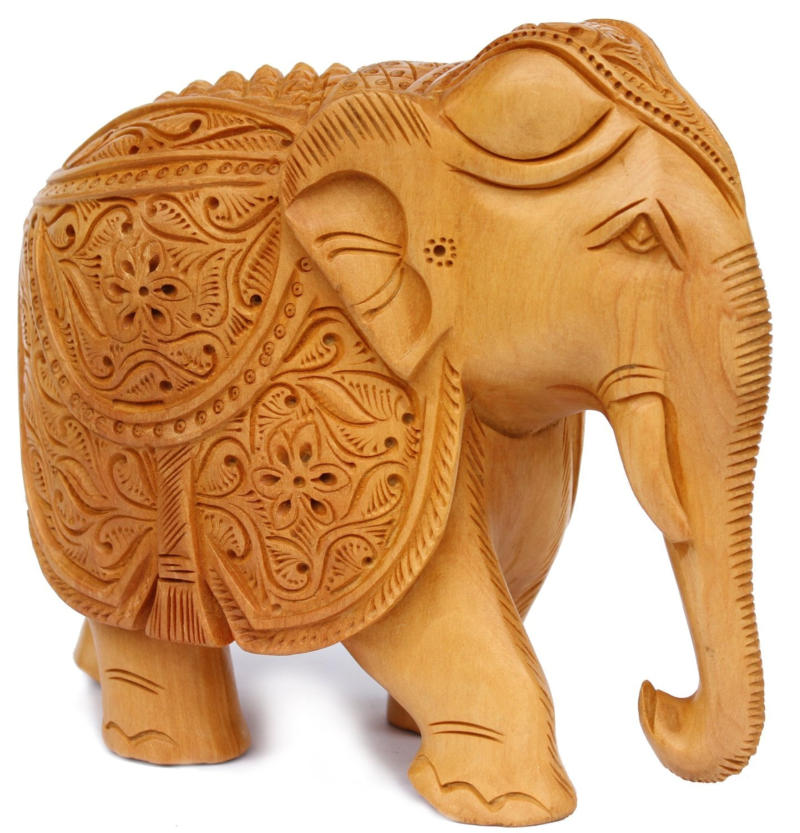
the jewelry and I said, Wait a minute, we can't do business. (I had seen a BIG elephant carving under
the table— he had only one of these and it was about 3 times as large as anything he had.) I pointed to
this and said that if he would throw this in as backsheesh we could close the deal. I said that this was
my final offer and that he could take it or leave it. After talking with his father, who had been standing on
the sidelines during all this, he agreed and away we went to the hotel with 6 boxes of carvings. Good
Ole Doc was completely satisfied and, to tell the truth, so was I.
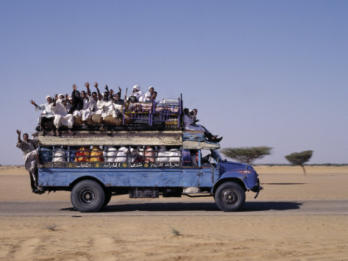
In a few hours we were on our way to Nairobi
on the train, out through lion country. Upon
arriving there I stayed with George VQ4AQ
this time. I found that, at last, my equipment
had arrived from Milan. Why it took a month to
go there I never did fin I out. While attending
to things, the Kansas City boys made a quick
trip down to VQ1 land (Zanzibar) just as
tourists. When they arrived back I had
everything done and I took off for VQ1 the
hard way, via African Bus through the jungle to
Dar-es-Salaam, Now this was some trip. You
ride an African Bus from Nairobi to Dar-es-
Salaam and you will see what I mean.
Monkeys, snakes, lions, elephants, zebras,
gazelles, vultures, you name it, I saw it by the
hundreds. It is a two-day trip, and rugged to
say the least.
Next month I will tell you about meeting VQ3PBD, good old Peter Dobs, and about operating in VQ1
land when it was a rare spot, I am still seeing the world and enjoying every minute of it too. This is
country number 99 for me!
I wonder if I will ever get to number 100— DXCC.
Maybe I will, maybe I won't— who knows?
Gus
Gus Browning, W4BPD

Agalela now (2017)
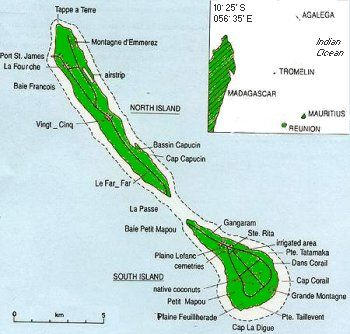
Agalega is a small island in
the Indian Ocean, 697 miles
(1122 Kms) almost north of
Mauritius. In fact it consists
of two islands; the North
Island and the South Island.
There are two villages in the
north, namely Vingt Cinq and
La Fourche and Ste Rita is
the only village in the South.
Vingt Cinq village is the
centre of administration for
both islands.
No piped water system
exists on both islands. Water
for drinking and cooking
purposes is collected mainly
through run-offs from roof
tops. Water for other
purposes is obtained from
wells. There is also no piped
sewerage system but some
buildings are equipped with
flush toilet facilities
connected to soak pits.
Telecommunication facilities
exist on both islands.
Read and see more...


Kingdom of Swat
Gus tried to get this part of
the world as a separate
country on the DXCC list.
The attempt failed.
More about Swat Kingdom ..

Platte Island
At 05°52′S 55°24′E, it is
south of the Seychelles
Bank. is one of the Southern
Coral Group. Platte Island is
located 130 kilometres (81
mi) south of Mahé, the main
island of the Seychelles.
The island, a low and
wooded sand cay, is about
1,300 metres (4,300 ft) long
north-south, with a width
from 250 metres (820 ft) in
the south to 550 metres
(1,800 ft) in the north,.

Hams - W4BPD - Gus Brwning 01


