To The Mountains of the Moon
Part 02. Sailing Out
After 25 months of preparation the Afican Pilgrim
departed from New York City to British Eastern Africa.
The big safari started, at last. It took 48 days to get to
Mombasa, Kenya
Departure from New York
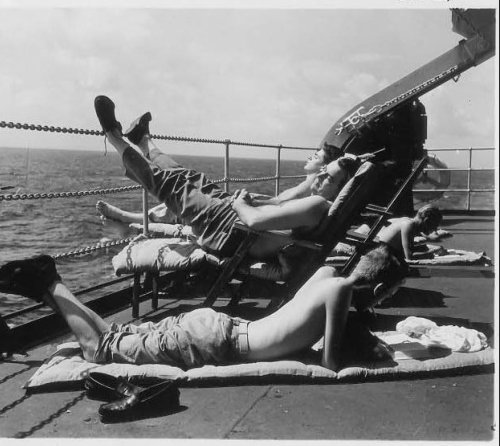
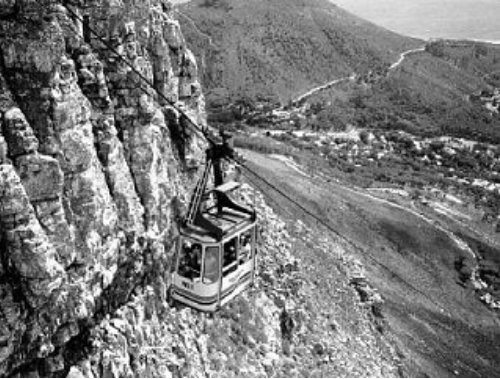
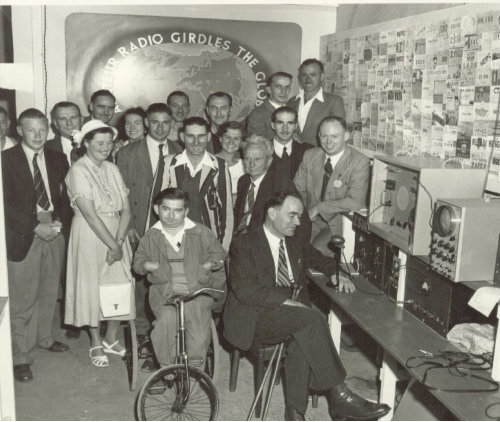
Bob's Safari-trek started with a trainride on November 19, 1947 from Oakland, California to New York City. Bob Leo will never forget this trainride, it would change his life forever. He had company from his mom, who joined him in Ogden, Utah. They had a drawing room on the train, with the same porter all the way from Oakland to New York. Bob met a very nice young girl from Holland, and spent many hours talking to her. Cobi Kapteyn was her name, born in the Netherlands. Her father raised flower bulbs in his fields near Amsterdam (actually in the flower bulb district near Sassenheim), and exported to North America. Their family would travel to USA for the bulb business and she would attend school where she improved her English while her father contacted flower bulb businesses. During WW II, Cobi had been active in the Dutch Underground. Bob even played cards with Cobi on that train to New York. Bob kept a notebook during the first days of the expedition. "My notes say nice things about her, I played cards with Cobi one evening", is all Bob wants to tell about this dutch girl. In Chicago, Bob met Bill Snyder again when they visited Hallicrafters. They had a nice conversation with Bill Halligan, the big boss of Halicrafters, and Bob arranged expedition times and frequencies with the crew of W9CGC, the clubstation at Hallicrafters. The "Shack on Wheels" was in New York, awaiting shipment. Instead of two to four weeks getting familiair with the equipment, there was no practice at all before the "Shack on Wheels" got operational. The engineers at Hallicrafters explained the portable rhombic antenna they had designed and fabricated for the expedition. Some planning was made by Hallicrafters. The call VQ5GHE had been assigned to the expedition's radio station. It was noticed that the letters "GHE" were intentional and were the initials for the words -Gatti- Hallicrafters Expedition. The "Fifth Avenue Ham Club", W9CGC, 4401 West Fifth Avenue, Chicago, Ill. was selected as the scheduled communication point (pilot) in the United States. From Chicago to New York there was again plenty of time talking to that dutch girl, Cobi. Bob was really attracted to her. In New York the two hams met the other members of the boarding party, Gatti, King, Prince and Powers. Mrs. Gatti however stayed invisible. In New York there were things to do at International Harvester (IH), the company who sponsored the expedition also. The trailer which had the combination of Photo Lab and Ham Shack housed together was presented to the press in the IH showroom. Gatti was at his best, the big leader of the upcoming trail to the Dark African Continent. All expeditiones were dressed in their “Colonial Clothes” and jungle helmets (dummy helmets made of cardboard). Gatti had done an excellent job of design, and all the eight trucks of IH and trailers (Schult Company) were painted with colors that would photograph well. The trucks and trailers where loaded on the ship on Friday November 28th, Saturday, November 29, 1947, the ship departed, one tug fore and one after. Still NO sight of Ellen Gatti. The African Pilgrim, with captain Alden Graham in command, passed New York harbor, the Narrows and Ambrose light, and out to sea. It would take 21 days before they saw land again. It was a good time on the ship, the food was oke, and they spent lots of time on deck. Attilio Gatti put Bill and Bob to work, typing stories and all kind of correspondence on portable typewriters. They had an agreement with the Commander, doing this kind of work also, and Gatti kept them busy. With help of Bowditch Practical Navigator, Bob figured out some distances and bearings from East Africa to various places. And of course they visited the sparks on the ship, Bob van Gelden, more than once. The 20 meter band on the ship was best for copying code. After some ten day of sailing, the crew got an invitation for a party at Gatti's deck. Gatti announced the grand introduction ceremony to the hidden Mrs. Gatti. It was the first time they met Mrs Ellen Gatti. She was real !! Mrs. Gatti was gracious. She seemed to know all about all of the expeditioners. Was she the real power behind this expedition? On December 19, the ship made landfall at 4 am. From the ship they could see the peaks surrounding Capetown harbor dimly through the mist. The ship docked in Capetown at 5:30 am. The expeditioners had to be careful, because the traffic was always on the "wrong side"of the road. The cops where riding on Harley Davidsons. Changing money was fun, they got pounds, shillings and pence for their dollars. A two shilling piece was a Florin, and a three pence piece was a Tickie. The ride with the cable car to Table Mountain, from 1050 feet to 3550 feet was fantastic. Going up was like visiting outher space, near the top it was just if the cable would go straight up. From the summit there was a magnificent view of the surrounding area, with the ocean far below, and Robben Island in the distance. According to Bob it could be compared to standing on top of the Half Dome in Yosemite, except that you could see over a much wider area. Things were partly British and partly Dutch in Capetown. That evening the Capetown hams invited them to their annual Christmas dinner. Among the attendance were ZS1R (Eric Rhodes, S/K), ZS1A (Jack Twine, S/K), ZS1B (Denis Richardson, S/K), ZS1BF (Willy Wilson, S/K), ZS1DU (Bruce Morrison, S/K) and ZS1CZ (Harold Tronson, S/K), ZS1FN (Eddy Farr) and ZS1FT (Herman Forrer), and some swls ZSL1BZ (Charlie Gingold, S/K) and ZSL1AE (Herbie Lissower, S/K). (Thanks ZS1AU for the info). Bill and Bob left their hosts about midnight. Next day Eric Rhodes and another man brought cars for a tour, and they visited Hout Bay, Fish Hoek Bay, False Bay, and the old Dutch museum Groot Constantia. The African Pilgrim departed again on December 21, 1947, and everyone was back in the old routine again. Capetown was a very pleasant experience, even though it was brief and hurried. Next day the captain gave the expeditioners a tour of the ship, chart room, bridge, fathometer, course recorder, radar, gyroscope etc. Bob learned to use the sextant, and how to shoot the stars on a clear night. Next morning they docked at Port Elisabeth. There was a meeting arranged at the Snake Park, seeing Johannes the snake guard, doing his tourist acts. So it was work for the photographers King and Prince. Very interesting. ZS2F, Jack Jarvic, came to the ship, and then Bob and Bill went to his place. Jack had worked a lot of Californian hams, perhaps more than Bob did, using only 20 watts. Also ZS2FH was visited, he had a radio store in town. Christmas was celebrated on open sea, somewhere between Port Elisabeth and Durban. The ship arrived in Durban on December 26. That evening, when they toured Durban, they saw bad gang fighting, and some guys pretty well beat up. It could have been worse. The same evening, a couple of local natives ambushed Fong, the Chief Steward, and one of his Chinese workers, and took their clothes, money and everything else they had along. Fong and his partner walked back to the ship completely naked. Bob had to do lots of shopping for the Commander, as they needed petrol tins, trunk straps, battery cables, funnel, fuses, coping saw, screw eyes etc. etc. Besides seeing Zulu drivers pulling a rickshaw, Bob learned from a local barber, that his hair was parted wrong. After the usual count down to welcome the New Year 1948, Bill Snyder pulled the whistle cord on board of the African Pilgrim. Other vessels in the harbor joined in the cacophony of whistles that tooted in the New Year. Also the captain was very glad, when he came out of his cabin in pajamas and shouted; “Get the hell away from the bridge". On sea, Bob was loaded again with work, typing and reading. Mrs. Gatti was sick, she had kidney problems. On January 7, they reached Dar es Salaam, Tanganyika. After mist and low clouds, covering the harbor had gone, the real Africa came up, trees, beach, lots of green colors, coconut palms and native dhows (Arabian sailing boats). Bob got in a native boat ashore, and walked thru native streets, between flamboyant trees with red flowers and between acacia type trees with various shades of light green. Next day the local paper had headlined the Gatti Hallicrafters Expedition, and Bob got some copies. January 9, they left Tanganyika, and docked in Zanzibar after 5 hours. Zanzibar was even more Africa with an Arabic look. With help of a native guide, Bob discovered the town. Narrow streets; stone paved streets; large doors with spikes; steel bars on windows; many, many shops; native quarters... Bob was very exited when he saw the book Stanley had left for recording wages paid to the natives on his expedition, looking for Livingstone. He had 620 natives, with wages from 5 to 14 dollars a month. The smell in Zanzibar was extreem, the pungent smells of curry and cloves. Next day, about 6 pm, the African Pilgrim, was back again in Tanganyika, this time in Tanga. And finally the expeditioners arrived in Mombasa, Kenya. The Kilindini harbor was too busy, the ship had to wait until january 15, to dock, 48 days after departure from New York City. Some 7,700 miles away from Chicago, Illinois ©W7LR and PA0ABM